Khatyn Memorial

Khatyn memorial, in the Minsk region of Belarus, remains one of the most haunting memorials of World War 2 in all Europe.
At the centre of the complex stands an astonishing 6m bronze statue called “The Unconquered Man” – a tribute to Joseph Kaminsky and his son. On the place of the barn where Khatyn people were burned there is a black plate resembling the roof. Nearby is a common grave with a symbolic wreath of memory with the words from the dead to the living.
The memorial has 26 chimneys with bells – one for each of the houses in the village – which ring out every hour. Each chimney has a plaque remembering the family members who died.
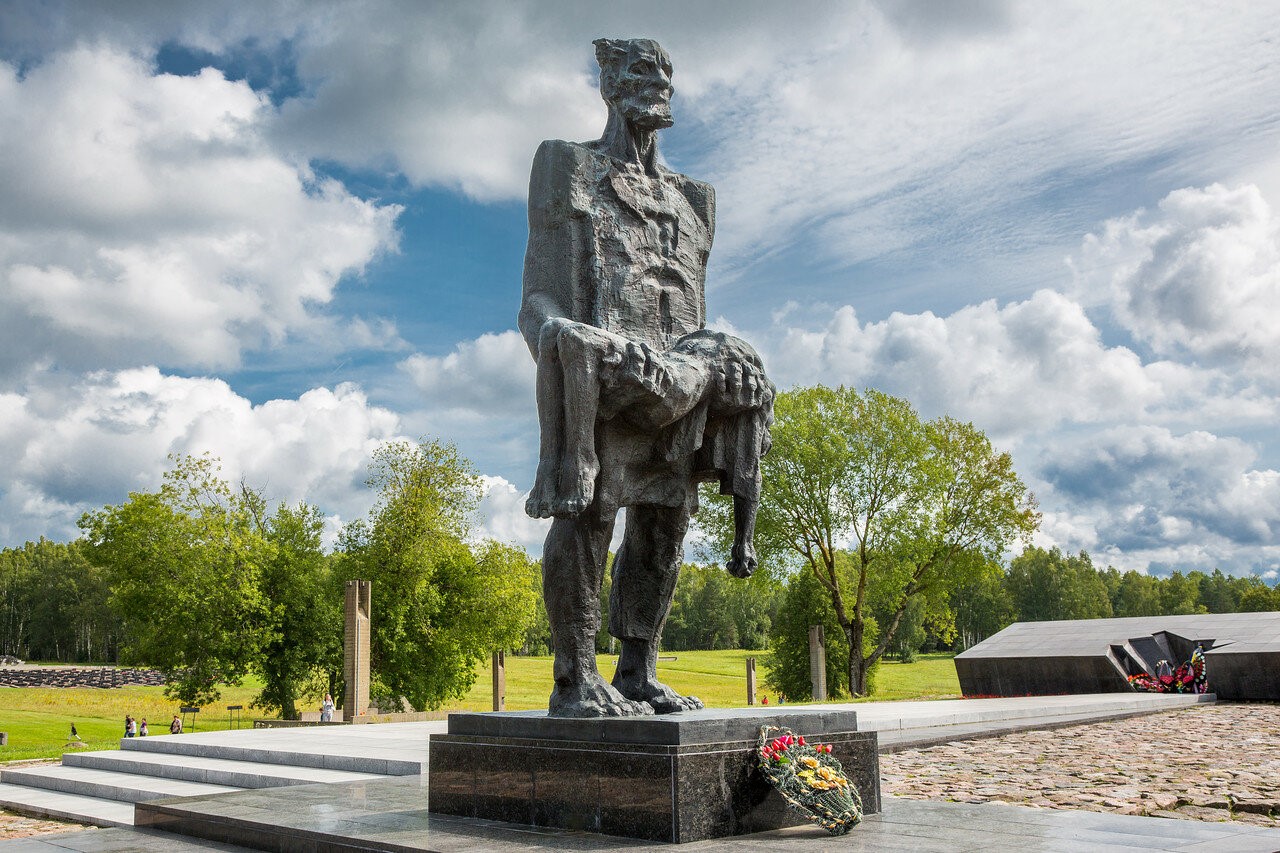
Two vast granite slabs mark the place where the barn was raised to the ground. Further into the memorial is a cemetery for the villagers, and another burial ground for all the other lost Belarus villages.
The symbolic cemetery of villages behind the houses-monuments has the soil brought from 185 burnt villages that never revived after the war.
The Wall of Sorrow near the cemetery represents the memorial slabs with the names of 66 largest death camps and places of massive loss of life.
The Square of Memory features three birch trees symbolizing life and Eternal Flame instead of a fourth tree commemorating the Belarusians killed during the war. Nearby is the Tree of Life with the list of 433 villages that were burned by the Nazis and were restored after the war.
In recent years a small museum and photo display have been added to the memorial.
Getting to Khatyn and where to stay:
- Khatyn can only really be reached by road.
- From Minsk, you take the M3 motorway towards Vitebsk. After 54km, there is a right turn to Khatyn, and the memorial is about 5km along this road.
- If you’re planning a trip, it’s best to stay in one of the many Minsk hotels. Some of the larger hotels arrange daytrips to the Khatyn memorial.